The web3 professional identity infrastructure limits to account for
Building a verifiable reputation in Web3 requires navigating a fragmented infrastructure landscape. Unlike traditional corporate directories, professional identity in decentralized systems relies on interoperable protocols rather than centralized databases. This creates a specific constraint: the need to balance public verifiability with privacy compliance.
Decentralized Identifiers (DIDs)
DIDs provide a self-sovereign anchor for professional credentials. They allow individuals to own their identity data without relying on a single provider. This structure supports cross-platform portability, ensuring that professional reputation travels with the user across different Web3 applications. However, managing private keys for DIDs introduces significant operational complexity for non-technical professionals.
Zero-Knowledge Proofs (ZKPs)
Zero-knowledge proofs enable credential verification without exposing underlying personal data. A professional can prove they hold a specific certification or meet age requirements without revealing their full identity or history. This is critical for compliance with regulations like GDPR, which mandate data minimization. While ZKPs enhance privacy, their implementation remains computationally intensive and less standardized than traditional KYC processes.
Verifiable Credentials (VCs)
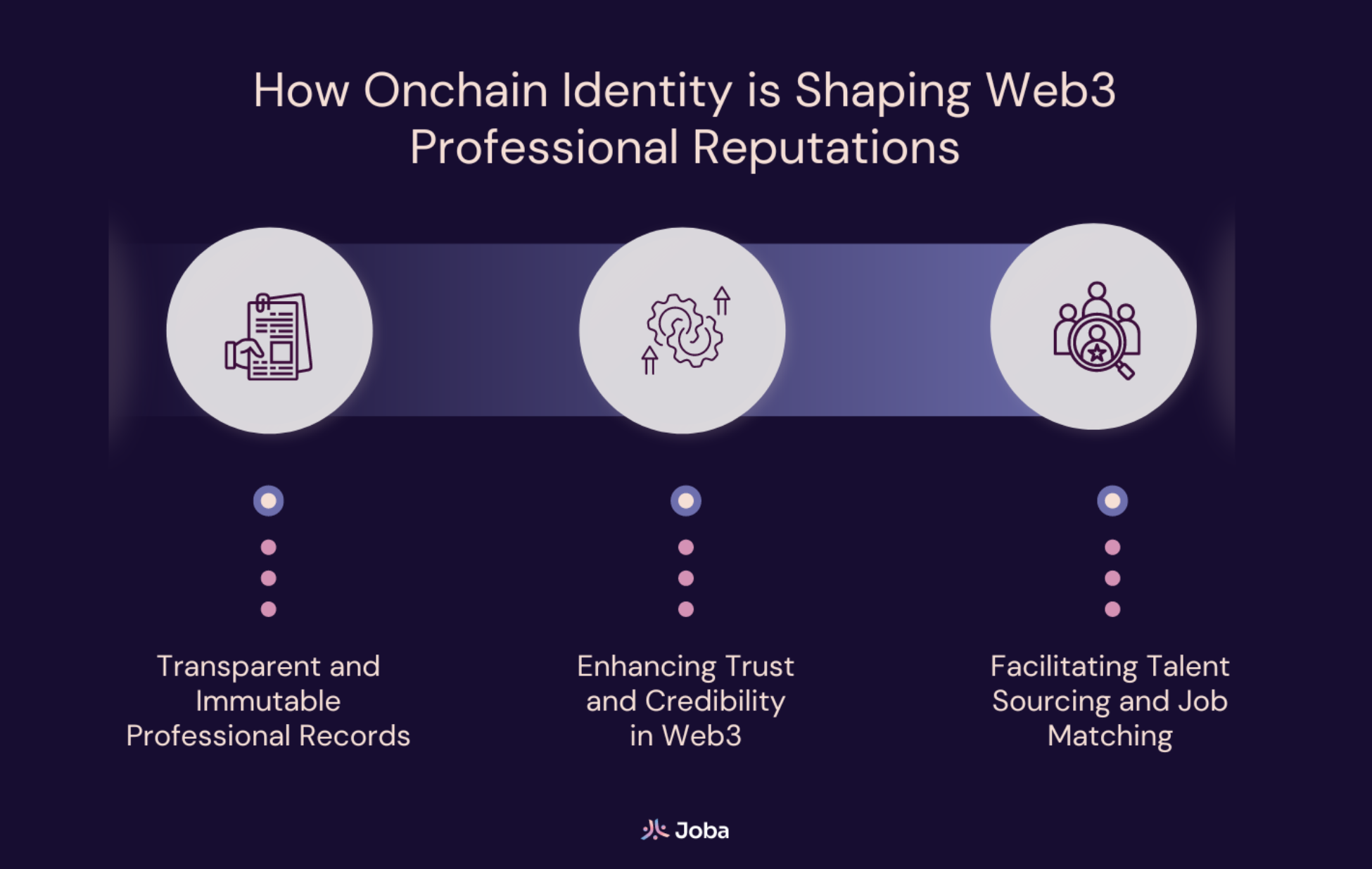
VCs are cryptographically signed statements from trusted issuers, such as universities or employers. They serve as the primary unit of reputation in Web3, allowing for modular and granular proof of professional history. Unlike centralized resumes, VCs can be selectively disclosed and instantly verified. The challenge lies in the lack of universal issuer standards, which can lead to fragmentation in how credentials are recognized across different platforms.
The core constraint is not technical capability but ecosystem alignment. Without widespread adoption of common standards for DIDs, ZKPs, and VCs, building a cohesive professional identity remains difficult. Professionals must choose which protocols to prioritize, accepting that current infrastructure may not yet support seamless, universal reputation portability.
Web3 professional identity infrastructure choices that change the plan
Building a verifiable reputation system requires balancing control, compliance, and usability. There is no single architecture that fits every professional need. The choice depends on how much data you are willing to expose to validators and how much overhead you can tolerate for verification.
You must evaluate three core factors: identity ownership, credential granularity, and regulatory interoperability. Each approach shifts the burden of proof differently. Some systems prioritize user privacy by limiting data sharing, while others offer easier compliance for employers or clients who need detailed background checks.
The following comparison breaks down the most common infrastructure models used in 2026. Use this to identify which tradeoff aligns with your specific professional goals.
| Infrastructure Model | User Control | Regulatory Fit | Setup Cost |
|---|---|---|---|
| Decentralized Identifiers (DIDs) | High | Low (Opt-in) | High |
| Centralized Databases | Low | High (Automated) | Low |
| Hybrid Blockchain | Medium | Medium | Medium |
| Zero-Knowledge Proofs | Very High | Low (Manual) | Very High |
Decentralized Identifiers (DIDs) give you full ownership of your credentials. You store them in a digital wallet and share only what is necessary. This minimizes data breaches but makes automated compliance checks difficult. Employers may require manual verification, slowing down hiring or contracting processes.
Centralized databases offer the smoothest user experience. Your identity is managed by a trusted provider who handles verification and storage. This fits well with strict regulatory environments like banking or healthcare. However, you rely entirely on that provider’s security and policies. If the provider fails, your professional identity is at risk.
Hybrid models attempt to bridge the gap. They use blockchain for immutable records while keeping sensitive data off-chain. This reduces storage costs and improves privacy. The tradeoff is increased complexity. You must manage both on-chain and off-chain components, which can be technically challenging for individual professionals.
Zero-Knowledge Proofs (ZKPs) allow you to prove a statement without revealing the underlying data. For example, you can prove you are over 18 or hold a specific license without showing your birthdate or license number. This offers the highest privacy but requires significant computational resources and technical expertise to implement correctly.
How to Choose the Right Verifiable Reputation Infrastructure
Building a Web3 professional identity requires balancing compliance requirements with user privacy. The landscape has shifted from experimental wallets to interoperable identity systems that support decentralized identifiers (DIDs) and verifiable credentials alongside existing Web2 infrastructure. Selecting the right foundation depends on your specific use case, whether it is enterprise onboarding, freelance verification, or decentralized governance participation.

Start by defining the regulatory boundaries of your identity system. If you operate in finance or healthcare, you likely need solutions that support Know Your Customer (KYC) checks and data minimization principles. Look for infrastructure that allows selective disclosure, enabling users to prove they meet criteria without revealing unnecessary personal data. This approach reduces liability and aligns with GDPR and other privacy frameworks.
Choose a protocol that supports widely adopted standards like W3C DIDs and VC Data Models. Interoperability ensures that credentials issued by one platform can be verified by another, creating a network effect for professional reputation. Avoid proprietary silos that lock users into a single ecosystem. Prioritize solutions that bridge Web3 credentials with traditional identity providers, allowing seamless verification across different platforms.
Complexity is the biggest barrier to adoption. Select an infrastructure that abstracts away cryptographic keys and transaction signing for the end user. Look for embedded wallets or account abstraction solutions that allow identity verification through familiar interfaces like email or social logins. A frictionless onboarding process ensures that professionals can build their reputation without needing deep technical expertise in blockchain mechanics.
Verify that the provider offers robust security features, including decentralized storage options and zero-knowledge proof capabilities. These technologies allow users to prove attributes without exposing the underlying data. Ensure the system has clear policies on data ownership and the ability for users to revoke access to their credentials. Strong privacy controls are essential for maintaining trust in a decentralized professional identity system.


As an Amazon Associate, we may earn from qualifying purchases.
By following these steps, you can select a Web3 professional identity infrastructure that meets your compliance needs while empowering users with control over their reputation. The right choice balances technical robustness with practical usability, ensuring long-term adoption and trust.
Common Mistakes in Web3 Identity
Building a verifiable reputation infrastructure requires precision. Misleading claims often suggest that decentralization eliminates all compliance obligations. This is false. Regulators still require clear audit trails for financial crimes.
Many platforms confuse decentralized identifiers (DIDs) with full identity solutions. DIDs are pointers, not credentials. Relying on them alone leaves gaps in verification.
Another weak option is ignoring privacy trade-offs. Zero-knowledge proofs help, but they must be implemented correctly. Poor implementation exposes user data to breaches.
Finally, avoid assuming interoperability is automatic. Standards evolve slowly. Integrating with existing Web2 systems demands careful middleware design. Test these connections early to prevent costly rework.
Frequently asked: what to check next
How does Web3 identity differ from traditional KYC?
Traditional identity verification relies on centralized databases where institutions store and control your data. Web3 identity infrastructure shifts this dynamic by using decentralized identifiers (DIDs) and verifiable credentials. This allows you to prove specific attributes, such as professional certification or age, without revealing your entire history or storing sensitive data on a central server. The result is a system where you control your digital reputation and share only what is necessary for compliance.
Can I use Web3 credentials with existing professional platforms?
Yes, modern Web3 identity solutions are designed to be interoperable with legacy systems. They function as a bridge between decentralized wallets and centralized platforms like LinkedIn or corporate HR systems. You can connect your decentralized identity to these services to auto-fill verified credentials, streamlining onboarding and background checks without sacrificing the privacy benefits of blockchain technology.
What happens if I lose access to my digital wallet?
Losing access to the private keys of your digital wallet can permanently lock you out of your credentials, as there is no central administrator to reset passwords. To mitigate this risk, reputable infrastructure providers offer social recovery options, multi-signature requirements, or custodial backup services. These mechanisms ensure that your professional reputation remains accessible even if your primary device is lost or stolen.
Is Web3 identity compliant with data privacy regulations like GDPR?
Web3 identity infrastructure is built to align with privacy-by-design principles, which supports compliance with regulations like the GDPR. Since you store your credentials locally and share them via zero-knowledge proofs, you retain control over your data. This minimizes the risk of large-scale data breaches and ensures that data processing is transparent and consent-based, addressing many of the concerns associated with centralized data storage.
No comments yet. Be the first to share your thoughts!