Defining professional identity on-chain
Web3 Professional Identity works best as a clear sequence: define the constraint, compare the realistic options, test the tradeoff, and choose the path with the fewest hidden costs. That order keeps the advice usable instead of decorative. After each step, pause long enough to check whether the recommendation still fits the reader's actual situation. If it depends on perfect timing, unusual access, or a best-case budget, include a simpler fallback.
The simplest way to use this section is to write down the real constraint first, compare each option against it, and choose the path that still works outside ideal conditions.
Core infrastructure for verifiable reputation
Professional identity in Web3 is not a logo or a tagline; it is a cryptographic stack. Unlike traditional profiles that rely on centralized platforms to verify your history, this infrastructure allows you to own and present your credentials directly. The system rests on three technical layers: Decentralized Identifiers (DIDs), Verifiable Credentials (VCs), and Soulbound Tokens (SBTs).
DIDs: The Addressable Self
A Decentralized Identifier (DID) is a unique, persistent identifier that you control, not a platform-assigned username. Think of a DID as your permanent cryptographic address. It does not contain personal data itself but acts as the anchor point for your identity record. This means you can link your professional history to this address without relying on a central server to store your profile. The W3C standard ensures these identifiers are interoperable across different blockchains and applications.
VCs: The Verified Proof
While DIDs provide the address, Verifiable Credentials provide the proof. A VC is a tamper-evident digital document issued by a trusted authority, such as a university, employer, or regulatory body. It contains claims about you—like your degree or certification—that are cryptographically signed. When you share a VC with a potential client or employer, they can instantly verify its authenticity against the issuer’s public key without needing to contact the issuer directly. This shifts trust from the platform to the cryptographic signature.
SBTs: The Non-Transferable History
Soulbound Tokens (SBTs) are non-transferable tokens attached to your DID. Unlike standard cryptocurrencies or NFTs, you cannot sell or trade SBTs. This immutability is critical for professional reputation. They represent achievements, memberships, or voting records that accumulate over time. Because they cannot be bought, they prevent the gaming of reputation systems. An SBT serves as a permanent, on-chain record of your professional journey.
Comparison of Infrastructure Layers
| Component | Issuance Authority | Transferability | Primary Use Case |
|---|---|---|---|
| DID | Self-Sovereign (User) | N/A | Permanent identity anchor |
| VC | Trusted Third Party | N/A (Attached to DID) | Verifiable claims (degrees, jobs) |
| SBT | Trusted Third Party | Non-Transferable | Long-term reputation accumulation |
This stack creates a verifiable reputation system where your professional history is portable, authentic, and under your control. It replaces the need for platform-specific badges with globally recognized cryptographic proofs.
Compliance and Regulatory Alignment
Your on-chain reputation is only as strong as your legal standing. In the Web3 professional landscape, a clean wallet address is no longer enough; institutions and sophisticated counterparties now demand proof that you exist, that you are who you say you are, and that you are not laundering money. This shift has moved identity from a marketing luxury to a compliance infrastructure requirement.
KYC/AML Integration
Traditional KYC (Know Your Customer) and AML (Anti-Money Laundering) checks are being digitized and integrated directly into Web3 identity protocols. Instead of submitting documents to a centralized exchange, you can now use decentralized identity (DID) standards to issue verifiable credentials. These credentials allow you to prove compliance attributes—such as "accredited investor" or "jurisdiction resident"—without revealing your underlying personal data.
This approach relies on zero-knowledge proofs (ZKPs), which let you verify a claim without exposing the raw data. For example, you can prove you are over 18 or located in a specific country without disclosing your exact birthdate or home address. This preserves your privacy while satisfying regulatory thresholds, making your professional identity both secure and compliant.
Navigating MiCA and Global Frameworks
The European Union’s Markets in Crypto-Assets (MiCA) regulation represents the most significant regulatory shift for Web3 professionals. MiCA establishes a unified framework for crypto-assets across the EU, requiring strict transparency and consumer protection standards. For professionals, this means that any service involving token issuance, exchange, or custody must adhere to these rules to operate legally within the bloc.
Compliance is not just about avoiding fines; it is a trust signal. Projects and individuals that proactively align with frameworks like MiCA signal to institutional partners that their operations are transparent and auditable. As global regulations evolve, your ability to demonstrate regulatory alignment will become a core component of your professional brand, distinguishing you from unregulated actors in the market.
Market tools for identity management
The infrastructure for professional identity in Web3 has matured from experimental protocols to enterprise-grade Wallet-as-a-Service (WaaS) providers. These platforms serve as the connective tissue between traditional digital credentials and on-chain reputation. For compliance-heavy industries, the choice of provider dictates how seamlessly a user can prove their identity without surrendering custody of their keys.
Web3Auth has emerged as a leading provider in this space, offering a non-custodial wallet solution that abstracts the complexity of private key management. By leveraging social logins and multi-party computation (MPC), it allows professionals to maintain a persistent identity while adhering to strict security standards. This approach reduces friction for traditional enterprises attempting to integrate with decentralized systems.
Beyond wallet infrastructure, specialized identity protocols like Dock focus on verifiable credentials. These tools enable organizations to issue tamper-proof attestations of professional qualifications and compliance status. The market is currently divided between those prioritizing user experience (UX) and those prioritizing granular data sovereignty. Selecting the right stack requires aligning these technical capabilities with your specific regulatory obligations.
Building your professional profile
Your digital reputation is your primary asset in Web3. Unlike traditional platforms where you rent visibility, here you own the infrastructure that proves who you are. This process moves from technical setup to verifiable proof, ensuring your identity is both recognizable and auditable.

Start by acquiring a domain on a decentralized registry like ENS or Unstoppable Domains. These assets are linked directly to your wallet address, serving as the immutable anchor for your professional identity. This step ensures that your contact information and reputation cannot be arbitrarily revoked by a third-party registrar.
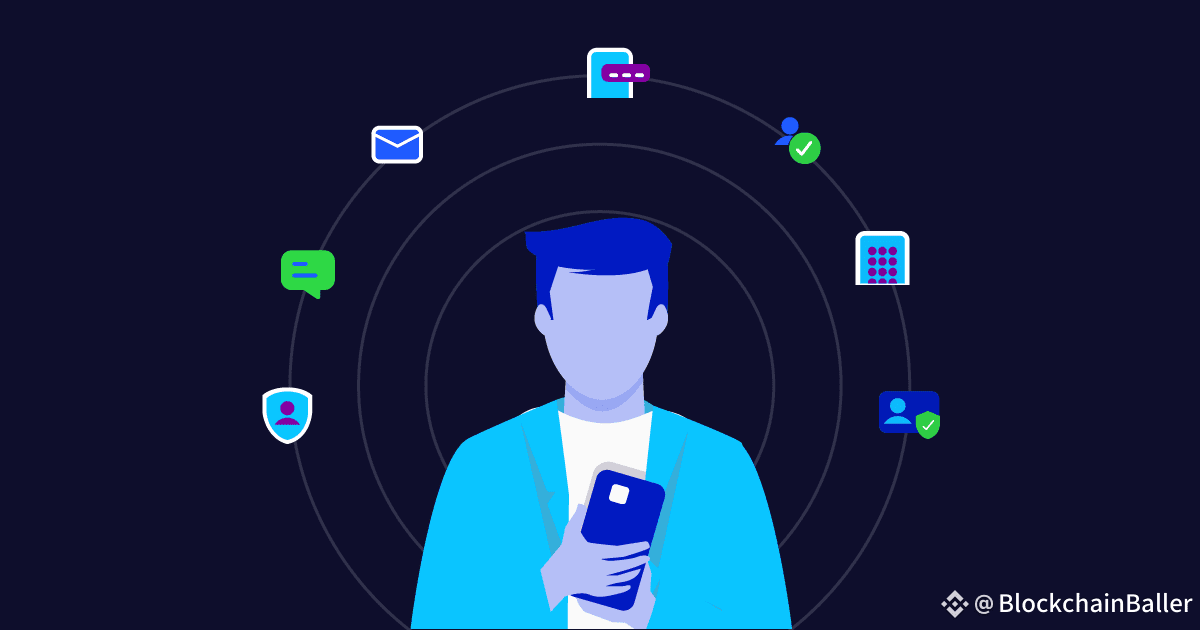
Connect your domain to a credential wallet that supports Soulbound Tokens (SBTs). These non-transferable tokens represent your educational degrees, work history, and professional certifications. Because they cannot be sold or transferred, they provide a tamper-proof record of your qualifications that employers and peers can verify instantly.
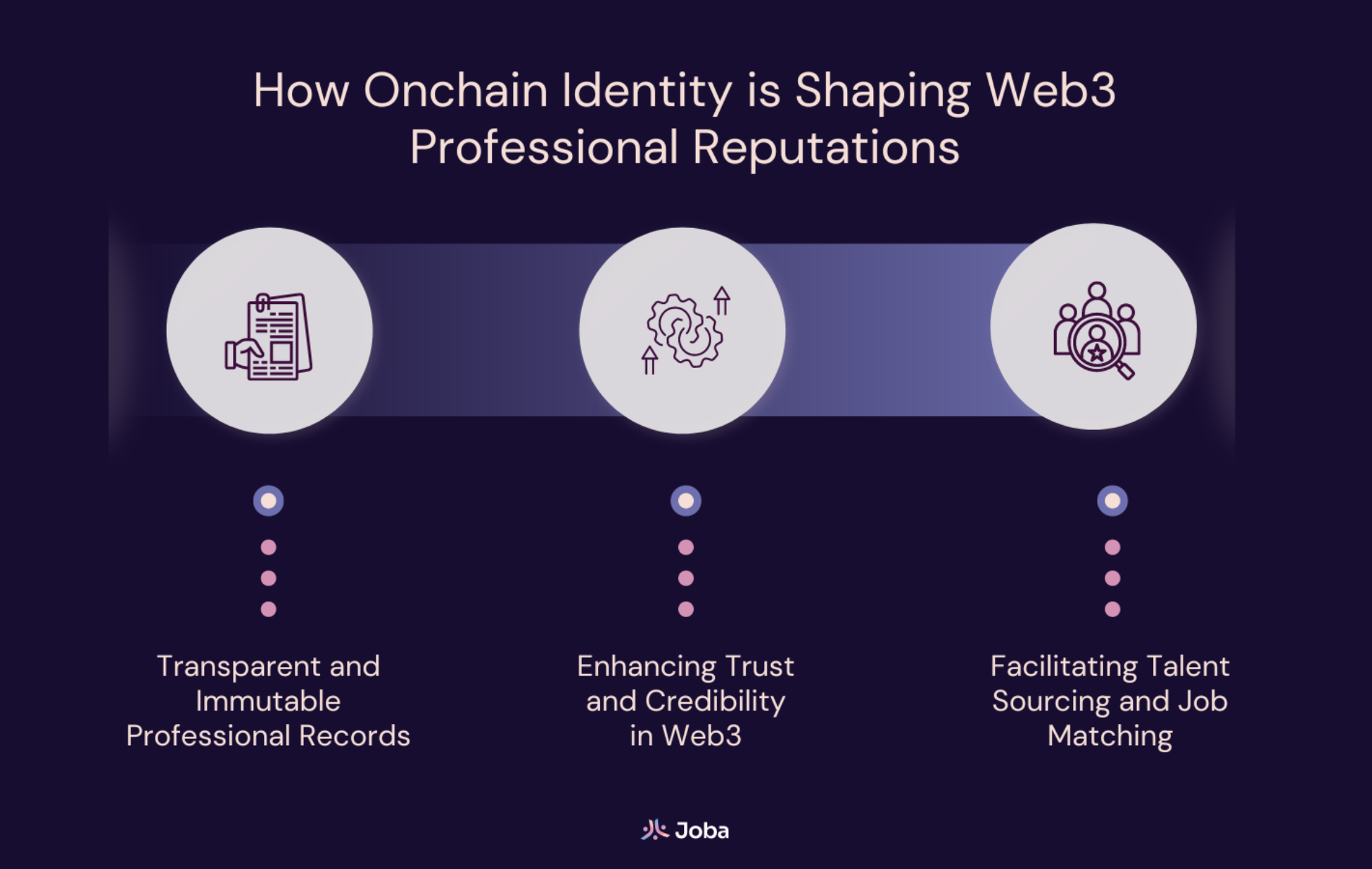
Link your wallet to identity aggregators like Gitcoin Passport or World ID. These tools analyze your transaction history and social connections to assign a reputation score. A higher score signals that you are a real person with a consistent digital footprint, which is often a prerequisite for accessing high-trust professional networks or governance roles.
Host your professional portfolio on a decentralized web platform like IPFS or Arweave, linked from your domain. This ensures your resume and project history remain accessible even if traditional hosting services go offline. Include direct links to your verified credentials and on-chain contributions to create a complete, self-sovereign professional narrative.
By following this workflow, you transition from relying on platform-dependent profiles to owning a portable, cryptographically verified identity. This infrastructure reduces friction in hiring and partnership processes, as your reputation is always with you and instantly verifiable.
No comments yet. Be the first to share your thoughts!