Defining web3 professional identity
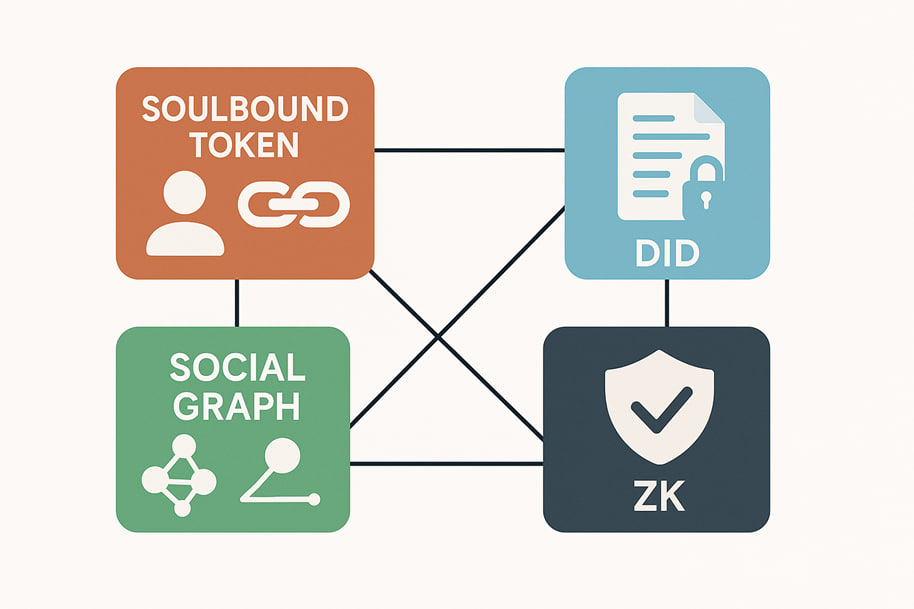
A Web3 professional identity is not a username. It is a cryptographic proof of who you are and what you can do, anchored in decentralized infrastructure rather than controlled by a single platform. In the traditional web, your reputation is often siloed within a specific app or social network. If that platform changes its rules or shuts down, your digital footprint can vanish or become inaccessible. Web3 professional identity changes this dynamic by giving you ownership of your credentials through Decentralized Identifiers (DIDs) and Verifiable Credentials (VCs).
At its core, a DID is a unique identifier that you control, not an entity like a corporation. Think of it as your own passport number, issued and managed by you, rather than a badge issued by your employer that they can revoke at will. This distinction is critical for professionals operating in a borderless, high-stakes environment. When you link a DID to your professional achievements, you create a portable, tamper-proof record that travels with you across different platforms and jurisdictions.
Verifiable Credentials (VCs) are the digital certificates attached to your DID. These are issued by trusted authorities—such as educational institutions, previous employers, or industry bodies—and can be verified instantly without contacting the issuer. This system replaces the slow, manual process of background checks and credential verification. For a professional, this means your expertise is instantly recognizable and trustworthy, reducing friction in hiring, contracting, and collaboration.
This infrastructure shifts the power dynamic. Instead of renting your audience and reputation from centralized platforms, you own your professional narrative. This is particularly important in the web3 space, where trust is established through cryptographic proof rather than platform algorithms. By adopting this model, professionals ensure that their identity is resilient, portable, and truly their own.
The compliance infrastructure layer
In traditional finance, proving your identity means handing over a passport, a utility bill, and a selfie to a centralized database. Web3 flips this model. Instead of hoarding data, the infrastructure layer relies on zero-knowledge proofs (ZKPs) to verify compliance without exposing the underlying personal information. This shift is critical for professionals who need to navigate regulatory requirements like KYC (Know Your Customer) and AML (Anti-Money Laundering) without surrendering their digital sovereignty.
At the core of this system are Decentralized Identifiers (DIDs) and verifiable credentials. A DID is not a social media handle; it is a cryptographically secure identifier that you control. When a regulator or exchange needs to verify your age, residency, or accreditation status, you can use a ZKP to generate a proof that answers "yes" or "no" to their specific question. You disclose only the minimum necessary information, preserving the rest.
This selective disclosure model transforms how professional identity integrates with regulatory frameworks. Rather than storing sensitive data in vulnerable central servers, compliance checks happen on-chain or via secure off-chain channels. The result is a robust audit trail that satisfies legal obligations while keeping personal data private. For high-stakes financial interactions, this balance between transparency and privacy is no longer optional—it is the foundational requirement.

Market leaders in identity infrastructure
Building a professional identity in Web3 requires choosing the right infrastructure layer. The market has shifted from experimental wallets to robust Wallet-as-a-Service (WaaS) and Decentralized Identifier (DID) providers. These platforms handle the complex cryptography and compliance checks that professionals need to operate securely.
Leading providers differentiate themselves through how they manage keys, issue verifiable credentials (VCs), and integrate with existing compliance frameworks. Some prioritize seamless user onboarding using social login, while others focus on deep integration with enterprise-grade audit trails. The choice depends on whether you value ease of use or granular control over your identity data.
The table below compares the core capabilities of three major infrastructure providers. These metrics reflect their current support for DID standards, VC issuance, and compliance tooling as of the latest public documentation.
| Provider | DID Support | VC Issuance | Compliance Tools |
|---|---|---|---|
| Web3Auth | Partial (via partners) | No native | SOC 2, GDPR |
| SpruceID | Full (DIDKit) | Yes | Open-source audit |
| Polygon ID | Full (Polygon ID) | Yes | Zero-knowledge proofs |
Building a verifiable reputation
Your Decentralized Identity (DID) is only as strong as the credentials attached to it. In Web3, trust isn't claimed; it's proven through on-chain history. Think of your DID as a digital ledger where every significant action—from a completed contract to a community vote—is a verified entry. Without these proofs, your identity is just an empty wallet address.
To assemble a professional reputation that holds up to scrutiny, follow this structured approach to linking your past work and credentials.
Start by connecting your Decentralized Identifiers (DIDs) to recognized issuers. Use verifiable credentials to attach degrees, certifications, or professional licenses directly to your identity. This creates a tamper-proof record that employers or clients can verify instantly without needing a middleman. Prioritize credentials from established institutions that issue on-chain proofs.
Your transaction history is your resume. Use portfolio aggregators to pull your past contributions into a single profile view. Whether it's code commits on GitHub linked to an ENS name or successful trades on a decentralized exchange, these actions serve as proof of skill. Ensure your wallet addresses are consistently linked to your primary DID to maintain a clean, unbroken thread of professional activity.
Reputation in Web3 is heavily influenced by community engagement. Record your participation in DAOs, such as voting records or proposal submissions. These activities demonstrate soft skills like governance and collaboration. Use platforms like Snapshot to link your voting history to your DID, providing a transparent record of your commitment to decentralized organizations.
To combat bots and sybil attacks, integrate a proof-of-humanity attestation. This step adds a layer of credibility by confirming you are a real person. Attestations from providers like Gitcoin or Worldcoin can be attached to your DID, signaling to other professionals that your identity is genuine and not an automated script.
By systematically linking these elements, you transform a static wallet address into a dynamic, verifiable professional profile. This infrastructure allows you to carry your reputation across different platforms and protocols, ensuring your work history remains yours, regardless of where you go next.
Frequently asked: what to check next
Can employers verify my Web3 professional identity?
Legal recognition of decentralized identities is still evolving. Most employers currently rely on self-reported credentials or third-party verification services rather than direct blockchain validation. Until regulatory frameworks standardize this process, treat your on-chain reputation as supplementary evidence rather than a legally binding credential.
Is my professional data private and secure?
Web3 identities offer greater control, but "privacy" depends on your configuration. Public ledgers mean some data is permanently visible. To protect your professional identity, use zero-knowledge proofs where possible and carefully manage which attributes are shared with prospective employers or collaborators.
Can I move my Web3 identity to a new platform?
Portability is a core feature of decentralized identity standards like DID. Unlike traditional profiles locked to a single company, you can typically migrate your credentials and reputation across compatible platforms. Always verify that the new platform supports the same interoperability standards to ensure a smooth transition.
What happens if my private key is compromised?
Recovery is difficult because there is no central authority to reset credentials. If your private key is lost or stolen, your professional identity and associated assets may be permanently inaccessible. Use hardware wallets and multi-signature setups to mitigate this high-stakes risk.
No comments yet. Be the first to share your thoughts!