Why on-chain reputation matters now
The Web3 Professional Identity works best as a clear sequence: define the constraint, compare the realistic options, test the tradeoff, and choose the path with the fewest hidden costs. That order keeps the advice usable instead of decorative. After each step, pause long enough to check whether the recommendation still fits the reader's actual situation. If it depends on perfect timing, unusual access, or a best-case budget, include a simpler fallback.
The simplest way to use this section is to write down the real constraint first, compare each option against it, and choose the path that still works outside ideal conditions.
The Technical Stack for Professional Identity
Building a Web3 professional identity requires moving beyond simple crypto wallets to a layered infrastructure of trust. This stack relies on three core primitives that work together to verify credentials, protect privacy, and establish ownership without relying on centralized authorities.
Decentralized Identifiers (DIDs)
A Decentralized Identifier (DID) is a unique, persistent identifier that you control, not a platform. Unlike a username on LinkedIn or an email address, a DID is tied to a cryptographic key pair stored in your wallet. This allows you to prove ownership of your identity across different applications without asking for permission from a central registry.
Verifiable Credentials (VCs)
While DIDs establish who you are, Verifiable Credentials (VCs) document what you are qualified to do. Think of a VC as a digital version of a university degree or a professional license. An issuer (like a university or employer) signs the credential cryptographically, and you hold it in your wallet. When a potential client or employer needs to verify your claim, they check the issuer's signature against the blockchain, confirming the document is authentic and unaltered.
Zero-Knowledge Proofs (ZKPs)
Zero-Knowledge Proofs (ZKPs) solve the privacy problem inherent in public blockchains. They allow you to prove you meet a specific criterion without revealing the underlying data. For example, you can prove you are over 18 or hold a specific security clearance without disclosing your birth date or the details of the clearance. This is essential for professional compliance, where revealing too much personal data can be a liability.

| Component | Primary Function | Privacy Level |
|---|---|---|
| DID | Establishes unique, self-sovereign ownership | High (No personal data exposed) |
| VC | Provides cryptographically signed proof of qualifications | Medium (Data is visible but verifiable) |
| ZKP | Validates claims without revealing raw data | Very High (Only the truth is revealed) |
These components form the backbone of a compliant Web3 professional identity. By combining them, you create a system where your reputation is portable, your credentials are tamper-proof, and your personal data remains under your control.
Top tools for identity management
Building a credible Web3 professional identity requires infrastructure that balances security with verifiable reputation. The landscape splits into two distinct categories: Wallet-as-a-Service (WaaS) platforms that simplify onboarding, and decentralized identity (DID) protocols that handle credential issuance. Choosing the right stack depends on whether your priority is frictionless access for users or immutable proof of qualifications for regulators.
Wallet-as-a-Service providers like Web3Auth have become the standard for managing non-custodial wallets without exposing private keys to end-users. These tools abstract away the complexity of seed phrases, allowing professionals to sign transactions using familiar methods like email or social login while maintaining control over their assets. For legal and compliance contexts, this separation of convenience from custody is critical, as it reduces the attack surface for credential theft while preserving the non-custodial nature required by many institutional frameworks. Web3Auth brand guide outlines how these protocols enable intuitive management of digital identities.
On the credential side, decentralized identity networks such as Dock Labs provide the infrastructure for issuing verifiable credentials that are not tied to a single centralized database. These tools allow professionals to store and present proof of education, employment history, or professional certifications directly from their wallet. This approach ensures that identity data remains portable and user-controlled, a key requirement for GDPR compliance and cross-border professional mobility. By leveraging these protocols, Web3 professionals can build a reputation system that is both auditable and resistant to censorship.
For those looking to deepen their understanding of these tools, several key resources provide practical guidance on implementation and best practices. The following selections offer foundational knowledge for building a compliant and secure professional presence in the decentralized web.


As an Amazon Associate, we may earn from qualifying purchases.
Navigating compliance requirements
Building a Web3 professional identity shouldn't require surrendering your data to a central authority. The challenge lies in meeting strict KYC (Know Your Customer) and AML (Anti-Money Laundering) standards while keeping your credentials decentralized. Professional identity tools solve this by using zero-knowledge proofs (ZKPs), which allow you to verify your status—such as being over 18 or not on a sanctions list—without revealing your actual name, address, or date of birth.
Think of it like showing a bouncer your ID. You don't hand over your entire wallet; you just prove you're old enough to enter. In the Web3 context, these tools let you generate a cryptographic receipt that proves compliance to regulators or exchanges. This ensures you can participate in regulated DeFi protocols or professional networks without exposing sensitive personal information to every entity you interact with.
Regulatory bodies like the Financial Action Task Force (FATF) are increasingly clarifying that these privacy-preserving methods are compliant, provided the underlying data can be audited by authorities when necessary. This balance is critical for institutional adoption. If professionals cannot prove they are compliant without leaking data, enterprises will hesitate to integrate Web3 tools into their workflows.
To understand the broader market context of these identity protocols, it helps to look at the performance of leading decentralized identity tokens. These assets often drive the development of the infrastructure that powers your professional reputation.
The rise of these tools means that maintaining a clean compliance record is now part of your digital resume. When you use a reputable identity provider, you are essentially building a verifiable history of trust. This history can be ported across platforms, reducing the friction of onboarding to new professional networks or financial services.
For those looking to secure their digital presence with hardware that supports these identity protocols, choosing the right wallet is the first step. A secure hardware wallet ensures that the private keys backing your professional identity remain offline and protected from phishing attacks.


As an Amazon Associate, we may earn from qualifying purchases.
By combining these technical safeguards with a clear understanding of compliance standards, you can plan around the Web3 landscape with confidence. Your professional identity becomes a verified asset rather than a liability, allowing you to operate securely across borders and platforms.
Building your professional profile
Establishing a verifiable Web3 professional identity requires assembling distinct data layers: on-chain history, reputation scores, and credential attestations. This process transforms fragmented wallet activity into a coherent narrative that employers and compliance officers can audit.
Connect your primary wallets to identity aggregators like Snapshot or Dune Analytics. These platforms visualize your transaction history, token holdings, and protocol interactions. This visual proof serves as the foundational layer of your professional resume, demonstrating active participation in the ecosystem.
Obtain credentials from recognized issuers such as Gitcoin Passport or Proof of Humanity. These attestations confirm your human identity or specific skill sets without revealing sensitive personal data. Storing these in a decentralized identity wallet ensures you control who accesses your qualifications.
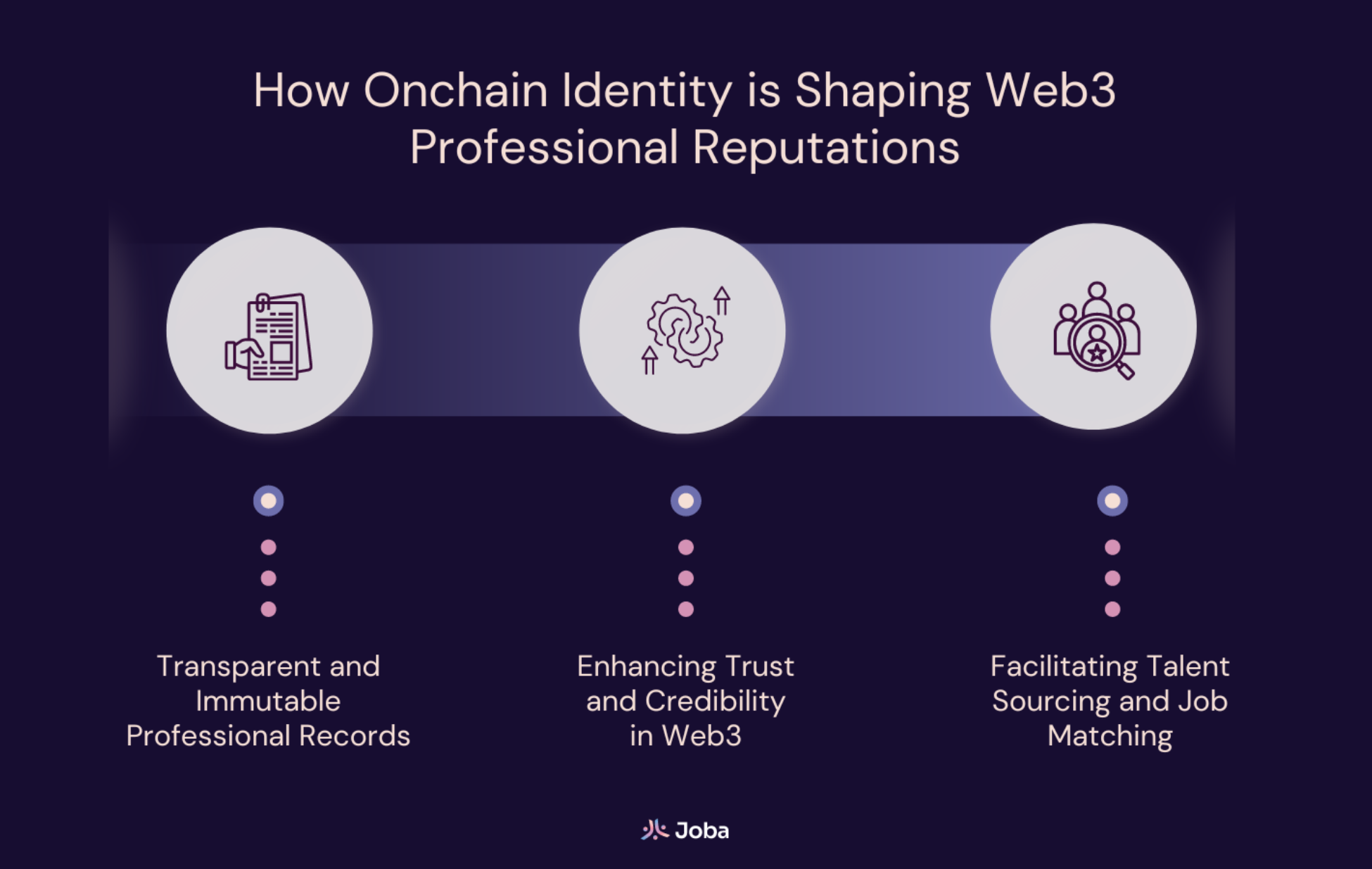
Utilize reputation protocols like Galxe or Zealy to accumulate points for community engagement. These scores act as social proof of your reliability and contribution value. A consistent history of positive interactions signals trustworthiness to potential employers in the decentralized space.
Compile these elements into a single, accessible profile page. Tools like Mirror.xyz or specialized identity dashboards allow you to link your aggregated data, credentials, and reputation scores. This unified view provides a comprehensive snapshot of your professional standing in the Web3 landscape.
To support your technical work, consider using professional-grade hardware that ensures secure key management and uninterrupted connectivity.


As an Amazon Associate, we may earn from qualifying purchases.
By following these steps, you create a robust, self-sovereign identity that stands up to regulatory scrutiny while showcasing your true value in the decentralized economy.
No comments yet. Be the first to share your thoughts!