Defining professional identity in web3
Casual web3 branding often stops at a stylized avatar and a connected wallet. Professional identity in web3 requires a different infrastructure entirely. It is not about visibility; it is about verifiability. For legal and regulatory professionals, trust is not an aesthetic choice. It is a technical requirement.
The shift moves control from centralized platforms to self-sovereign identifiers (DIDs). These identifiers allow you to prove credentials without relying on a third-party server to store your data. This distinction is critical when dealing with compliance-ready identity systems.
This infrastructure relies on verifiable credentials issued by trusted authorities. Instead of uploading a PDF resume to a job board, you hold a cryptographically signed credential in your wallet. This allows for selective disclosure. You can prove you are a licensed attorney in a specific jurisdiction without revealing your entire personal history.
The result is a professional identity that is portable, secure, and auditable. It replaces the static profile with a dynamic, proof-based system. This is the foundation for any serious professional engagement in the decentralized web.
Core infrastructure components
A professional Web3 identity isn't a single file or a static profile picture. It is a technical stack built on three interlocking pieces: Decentralized Identifiers (DIDs), Verifiable Credentials (VCs), and Verifiable Presentations (VPs). Understanding how these pieces interact explains how you can prove your qualifications without handing over your entire life history.
Decentralized Identifiers (DIDs)
Think of a DID as your unique digital address on the blockchain. Unlike a username on a centralized platform, a DID is self-sovereign. You create it, you control the private keys that unlock it, and it exists independently of any specific company or database.
For a professional, this means your identity isn't tied to an employer's HR system or a social media account. It is a permanent, portable anchor. When you link your professional credentials to this DID, you own the relationship between your identity and your achievements. If you change jobs or platforms, your DID remains the same, carrying your verified history with you.
Verifiable Credentials (VCs)
If a DID is your address, a Verifiable Credential is the official document you hold. A VC is a tamper-proof digital certificate issued by a trusted authority, such as a university, a bar association, or a certification body.
Instead of emailing a PDF transcript that can be altered, the issuer signs the credential cryptographically. This signature proves the document is authentic and hasn't been changed since issuance. You store these VCs in a digital wallet. They are yours to keep, update, or discard, giving you full control over your professional portfolio.
Verifiable Presentations (VPs)
This is where privacy and utility meet. When a potential client or employer asks for proof of your qualifications, you don't send them your entire wallet. You create a Verifiable Presentation.
A VP allows you to select specific credentials and share only what is necessary. You can prove you have a specific license without revealing your birth date, home address, or other unrelated personal data. The recipient can instantly verify the cryptographic signature against the issuer's public key, confirming authenticity without needing to contact the issuer directly. This selective disclosure is the core advantage of the Web3 stack.
Traditional KYC vs. Web3 VC Verification
The shift from traditional Know Your Customer (KYC) processes to Web3-based verification changes who holds the data and how quickly it can be validated.
| Feature | Traditional KYC | Web3 VC Verification |
|---|---|---|
| Data Storage | Centralized databases | User-controlled wallet |
| Verification Speed | Days to weeks | Seconds |
| Data Exposure | Full personal history shared | Selective disclosure only |
| Ownership | Provider-owned | User-owned |
Compliance and Regulatory Alignment
Navigating Web3 professional identity requires balancing decentralized autonomy with the rigid demands of traditional finance. As regulatory frameworks harden, the ability to prove compliance without surrendering total privacy has become the defining challenge for professionals in this space. This is not merely about avoiding penalties; it is about maintaining the credibility required to operate in high-stakes environments.
The Privacy-Compliance Paradox
The core tension lies in the nature of blockchain itself: immutable, transparent, and pseudonymous. Traditional AML/KYC protocols require known identities, while Web3 ethos prioritizes data sovereignty. Professional tools now bridge this gap through zero-knowledge proofs (ZKPs) and selective disclosure. These technologies allow a user to prove they meet specific criteria—such as being over 18, residing in a compliant jurisdiction, or not being on a sanctions list—without revealing their underlying personal data.
This approach shifts the burden of verification from the user to the protocol. Instead of uploading passports to every platform, professionals can generate a verifiable credential once. This credential is then cryptographically signed and stored in a decentralized identity (DID) wallet. When a counterparty requests verification, the user shares only the necessary proof. This preserves privacy while satisfying regulatory audits, creating a more efficient and secure professional identity layer.
Regulatory Landscapes and Enforcement
Regulatory bodies are increasingly targeting the intersection of identity and finance. The EU’s Markets in Crypto-Assets (MiCA) regulation and the FATF’s Travel Rule are setting global standards for how identity data moves across borders. For Web3 professionals, ignoring these trends is not an option. Compliance is no longer optional; it is a prerequisite for institutional adoption and professional legitimacy.
The financial implications of non-compliance are severe. Recent enforcement actions by agencies like the SEC and FinCEN have demonstrated that anonymity is not a shield against regulatory scrutiny. Professionals must ensure their identity tools are aligned with current legal requirements. This means using platforms that support standard compliance protocols and avoiding tools that explicitly facilitate evasion. The goal is not to hide, but to manage identity responsibly within the bounds of the law.
Building a Compliant Professional Profile
To operate effectively, Web3 professionals should adopt a layered identity strategy. Start with a verified decentralized identity that links to your real-world credentials through trusted attestations. Use this identity to interact with regulated DeFi platforms, NFT marketplaces, and professional networks. Ensure your wallet activity is clean and traceable, as blockchain analysis firms are increasingly used by regulators to map illicit activities.
Staying informed about evolving regulations in your jurisdiction is equally important. Compliance is not a static state but an ongoing process. Regularly audit your digital footprint and update your verification status as laws change. By integrating compliance into your professional identity from the start, you protect your reputation and ensure long-term viability in the Web3 ecosystem.
Essential tools for reputation management
Managing your Web3 Professional Identity requires more than just a wallet address; it demands a stack of tools that verify your credentials while protecting your privacy. Unlike traditional social media profiles, where platforms own your data, Web3 tools allow you to curate a portable, verifiable reputation. This section outlines the core software and hardware components necessary to build and secure that identity.
Portfolio builders and identity wallets
Your digital resume in Web3 is often a combination of a decentralized identity (DID) wallet and a portfolio site. Tools like ENS (Ethereum Name Service) or Unstoppable Domains let you replace long, complex wallet addresses with human-readable names. These names act as the public-facing anchor of your professional identity, linking to your on-chain activity and verified credentials.
For portfolio building, platforms like Lens Protocol or Farcaster allow you to own your social graph and content. Instead of building an audience on a centralized network that can change its rules overnight, you build on open protocols. This ensures that your professional reputation travels with you, regardless of which applications you use.
Securing your keys
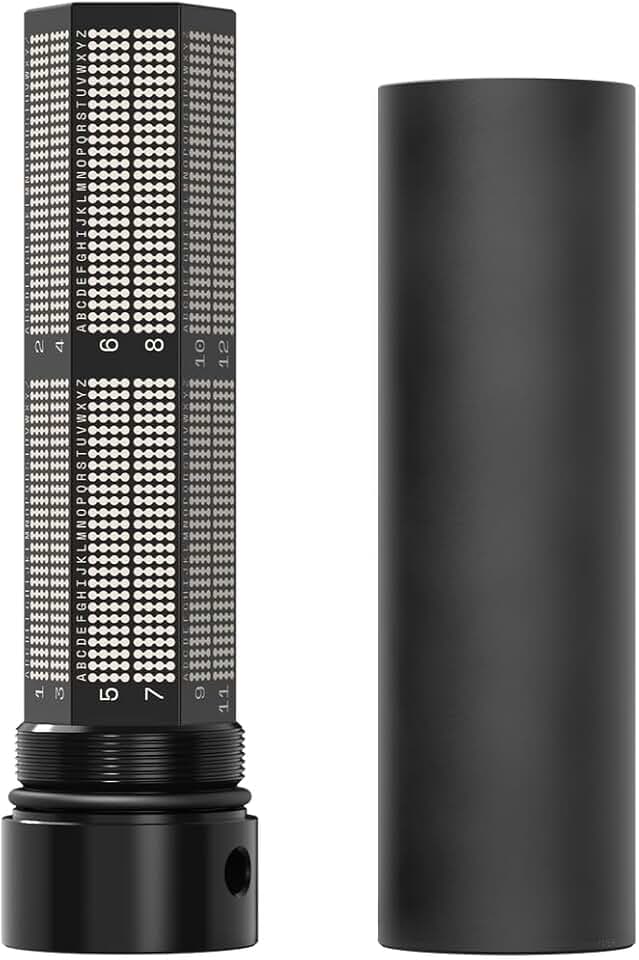
Your reputation is only as strong as your security. If your private keys are compromised, your professional identity—and the assets tied to it—can be stolen or defaced. Hardware wallets are the standard for securing the keys that sign your professional actions. They keep your private keys offline, protecting them from phishing attacks and malware.
When selecting hardware, look for devices that support open-source firmware and offer strong physical security features. Popular options include the Ledger Nano X and the Trezor Model T. These devices allow you to sign transactions without exposing your keys to your computer, ensuring that your professional reputation remains under your sole control.


As an Amazon Associate, we may earn from qualifying purchases.
Verifiable credentials
Beyond basic wallets, look into tools that issue Verifiable Credentials (VCs). These are digital attestations from trusted entities—such as universities, employers, or professional bodies—that can be stored in your wallet and presented when needed. This allows you to prove your qualifications without revealing unnecessary personal data, maintaining the privacy-first ethos of Web3 while establishing professional credibility.
Privacy strategies for professionals
Maintaining a professional Web3 identity requires balancing visibility with security. Unlike traditional corporate structures, on-chain activity is permanent and public. A single misstep can expose sensitive business logic or personal data to competitors and malicious actors.
To mitigate these risks, professionals should adopt a layered approach. First, segregate identities. Use separate wallets for high-value transactions, daily operations, and public engagement. This limits the blast radius if one address is compromised or doxxed. Second, utilize privacy-enhancing technologies where compliance allows. Tools like zero-knowledge proofs can verify credentials without revealing underlying data.
Regular audits are essential. Review smart contract interactions and token approvals to ensure no lingering permissions exist. This practice, often called a privacy audit, helps clean up digital footprints that accumulate over time. By treating privacy as an ongoing process rather than a one-time setup, you protect your professional reputation and assets.
-
Segregate wallets by function (e.g., ops, investment, personal)
-
Revoke unused token approvals via tools like Revoke.cash
-
Verify credential disclosures do not leak off-chain metadata
-
Enable multi-signature controls for critical professional accounts
No comments yet. Be the first to share your thoughts!