Defining professional identity in web3
Most people confuse a Web3 handle with a professional identity. A Twitter avatar or an ENS name is a brand, not a credential. In traditional finance, your professional standing is verified through licenses, background checks, and institutional endorsements. Web3 lacks these centralized gatekeepers, which creates a trust gap. You cannot simply claim to be a certified auditor or a licensed compliance officer; you must prove it.
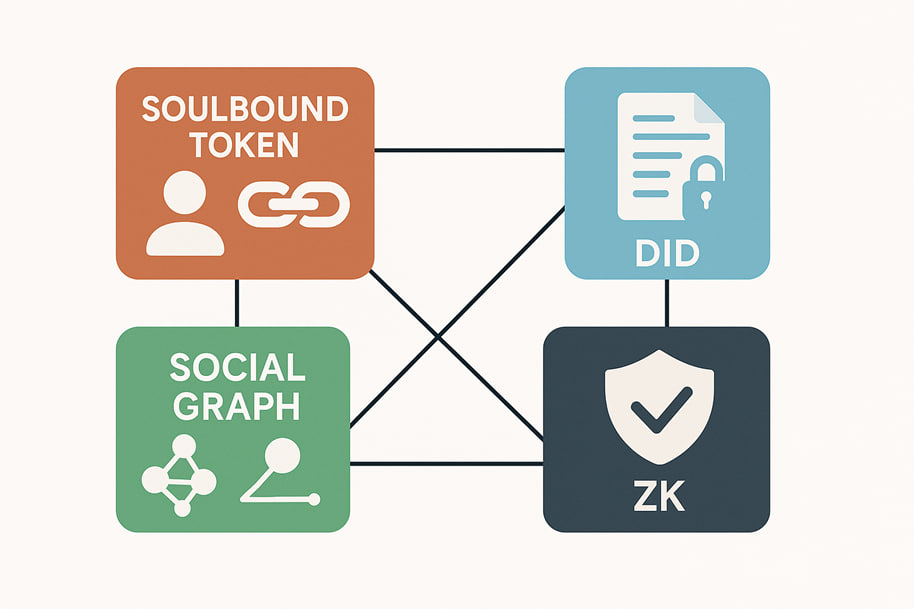
This is where the concept of a Web3 professional identity diverges from casual branding. It is not about aesthetics or social signaling. It is a cryptographically verifiable set of credentials tied to a Decentralized Identifier (DID). Think of it as a digital passport that you hold, rather than a resume hosted on a LinkedIn server. The data belongs to you, and you control who sees it.
The shift from social signaling to cryptographic verification changes how trust is established. In Web2, trust is delegated to platforms. In Web3, trust is derived from mathematical proof. When you present your Web3 professional identity, you are not asking a third party to vouch for you. You are providing zero-knowledge proofs or signed attestations from recognized issuers. This allows you to verify your qualifications without exposing your underlying personal data.
For legal and regulatory audiences, this distinction is critical. A professional identity in this space must be auditable. It must withstand scrutiny because it often governs access to capital, governance rights, or regulated financial activities. Building a reputation on unverified claims is risky; building it on verifiable, self-sovereign credentials is the foundation of a sustainable Web3 career.
The Infrastructure Layers for Verifiable Reputation
Building a professional identity in Web3 requires a specific technical stack that shifts control from centralized platforms to the individual. At the core of this architecture are Decentralized Identifiers (DIDs) and Verifiable Credentials (VCs). These standards, defined by the W3C, provide the cryptographic foundation for self-sovereign identity, allowing professionals to own their reputation data rather than renting it from employers or social networks.
Decentralized Identifiers (DIDs)
A DID is a globally unique identifier that does not rely on a central registry. Instead, it is anchored on a distributed ledger or decentralized network, giving the holder full control over the associated keys. For a professional, this means your identity is not tied to a specific employer’s email domain or a corporate LinkedIn account. You can link multiple DIDs to different professional contexts—such as one for legal practice and another for consulting—while maintaining a single underlying identity you control.
Verifiable Credentials (VCs)
Verifiable Credentials are the digital equivalent of professional licenses, degrees, or employment records. Issued by trusted entities like universities, bar associations, or previous employers, these credentials are cryptographically signed. This signature allows any verifier to confirm the authenticity of the claim without needing to contact the issuer directly. The credential lives in your digital wallet, and you decide when and with whom to share it, enabling selective disclosure of only the necessary information.

The Role of Issuers and Verifiers
The ecosystem relies on a three-party model: the Issuer, the Holder, and the Verifier. The Issuer (e.g., a law school) creates and signs the credential. The Holder (you) stores it in a secure wallet. The Verifier (e.g., a prospective client or employer) checks the cryptographic signature to validate the credential. This flow ensures that professional reputation is portable, tamper-proof, and independent of any single platform’s infrastructure.
Using zk-proofs for privacy and compliance
Zero-Knowledge Proofs (ZKPs) solve the fundamental tension in Web3 professional identity: the need to verify credentials without exposing sensitive personal data. In traditional systems, proving you are an accredited investor or a licensed attorney requires handing over tax returns, government IDs, or bar association records. ZKPs change this dynamic by allowing a user to generate a cryptographic proof that a statement is true without revealing the underlying data.
For a Web3 professional, this means you can prove you meet specific regulatory criteria—such as age, residency, or certification status—while keeping your PII (Personally Identifiable Information) private. The verification happens on-chain, but the proof itself contains no raw data. This approach aligns with the "data minimization" principle favored by regulators like the GDPR, which mandates that only the minimum necessary data be processed.
How it works in practice
Consider a DeFi protocol requiring KYC (Know Your Customer) compliance. Instead of uploading a passport scan, you interact with a trusted issuer (like a university or government body) that has previously verified your identity. The issuer signs a credential. You then use a ZK-circuit to prove that the signed credential contains a valid attribute (e.g., "is_accredited") without revealing your name or ID number. The protocol accepts the proof, granting you access.
This method reduces the attack surface for identity theft. Since no central repository holds your raw credentials, there is no single point of failure for hackers to exploit. The proof is valid only for the specific condition being checked, preventing credential stuffing or cross-site tracking.
Compliance implications
Regulators are increasingly interested in ZKPs because they offer "compliance by design." Auditors can verify that the ZK-circuit logic correctly enforces regulatory rules without seeing the user's private data. This transparency helps build trust with legal teams who are often skeptical of decentralized systems. As ZK technology matures, we expect to see more standardized circuits for common professional credentials, making compliance checks faster and more interoperable across platforms.
Build a compliance-first reputation strategy
Your Web3 professional identity is only as strong as the verifiable data backing it. To navigate regulatory scrutiny and build trust with counterparties, you must move beyond simple social presence and construct a credential-based reputation layer. This process requires deliberate selection of issuers, secure storage, and rigorous testing of your verification flows.
Begin by choosing a Decentralized Identifier (DID) method that aligns with your jurisdiction and industry requirements. Look for methods that support revocation lists and meet current W3C standards. This foundational layer ensures your identity is portable and under your direct control, rather than locked into a single corporate platform.
Seek Verifiable Credentials (VCs) from recognized authorities such as accredited universities, licensed financial institutions, or government bodies. These credentials serve as the primary proof of your qualifications and standing. Prioritize issuers with established reputations to ensure your credentials carry weight during due diligence checks.
Consolidate your credentials in a self-sovereign identity wallet that supports the necessary DID methods and credential formats. Ensure the wallet allows for granular control over data sharing, enabling you to disclose only what is necessary for a specific verification request. This minimizes data exposure and aligns with privacy-by-design principles.
Regularly audit your identity setup by simulating verification requests from potential partners or compliance officers. Verify that your credentials are readable, that zero-knowledge proofs function as intended if required, and that your revocation status is current. This proactive maintenance prevents failures during critical business interactions.
By treating your Web3 professional identity as a living asset rather than a static profile, you create a resilient framework for professional engagement. This approach not only satisfies compliance requirements but also establishes a clear, auditable trail of your professional history and credentials.
Market trends in identity infrastructure
Web3 Professional Identity works best as a clear sequence: define the constraint, compare the realistic options, test the tradeoff, and choose the path with the fewest hidden costs. That order keeps the advice usable instead of decorative. After each step, pause long enough to check whether the recommendation still fits the reader's actual situation. If it depends on perfect timing, unusual access, or a best-case budget, include a simpler fallback.
| Factor | What to check | Why it matters |
|---|---|---|
| Fit | Match the option to the primary use case. | A good deal still fails if it does not fit the job. |
| Condition | Verify age, wear, and service history. | Hidden condition issues erase upfront savings. |
| Cost | Compare purchase price with likely upkeep. | The cheapest option is not always the lowest-cost option. |
No comments yet. Be the first to share your thoughts!