Why professional identity matters now
Your LinkedIn profile or Twitter bio is no longer enough. In Web2, your reputation lives on rented land. Platforms control the data, change the algorithms, and can delete your account overnight. If you lose access, you lose your professional history, your network, and your credibility. That is a single point of failure for your career.
Web3 professional identity changes the power dynamic. It shifts control from centralized platforms to you. You hold the keys to your verifiable credentials. These are not just digital cards; they are cryptographic proof of your skills, certifications, and work history. This data is portable, meaning you can take it with you from one platform to another without starting from scratch.
This shift creates a new career asset: portable reputation. In high-stakes legal and regulatory fields, trust is the currency. Verifiable, decentralized credentials provide a layer of authenticity that traditional resumes cannot match. They reduce the friction of hiring and compliance checks. When your identity is self-sovereign, your reputation becomes a durable, independent asset.
The infrastructure for this is already here. Tools like decentralized identity protocols and verifiable credentials allow you to issue and store proof of your professional standing. This is not about abstract theory; it is about concrete tools that protect your career longevity. As the industry matures, having a verifiable Web3 identity will be as standard as having a tax ID or a bank account.
Core infrastructure: DIDs and verifiable credentials
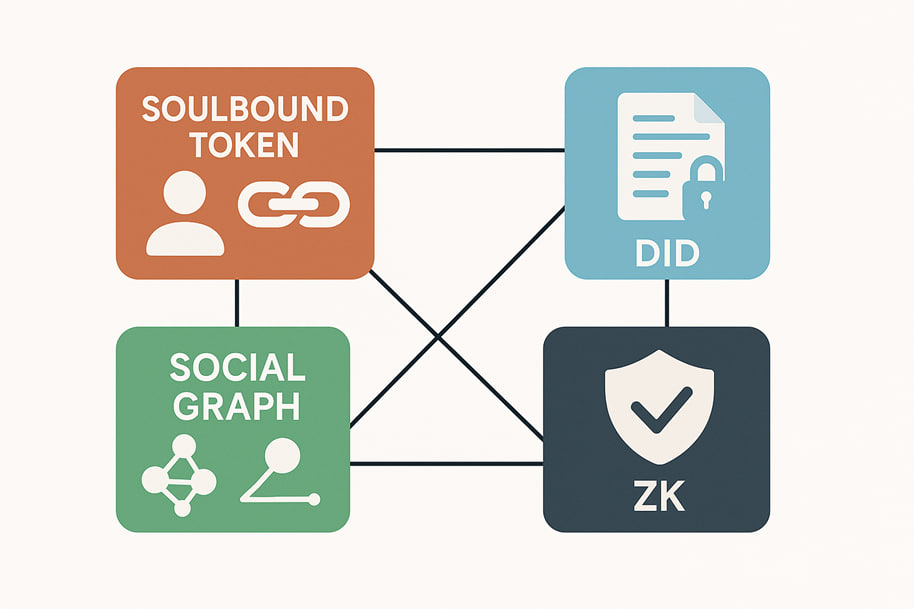
Professional identity in Web3 rests on two technical pillars: Decentralized Identifiers (DIDs) and Verifiable Credentials (VCs). These standards allow you to prove who you are without handing over your entire digital life. Instead of storing personal data on a central server, DIDs give you a unique, self-controlled identifier on the blockchain, while VCs act as digital badges issued by trusted organizations.
Think of a DID as your permanent address in the digital world. It is not tied to a specific company or platform. You create it once, and you control it forever. When you need to verify your identity for a job application or a regulatory check, you point to this DID. The verifier then checks the blockchain to confirm the ID is active and owned by you, without needing to ask your employer or a government agency for permission.
Verifiable Credentials are the proof attached to that identity. Imagine a university diploma or a professional license as a sealed envelope. In Web3, these become encrypted digital tokens. The issuer (like a law firm or a certification body) signs the credential, proving it is genuine. You hold this credential in your digital wallet. When a client asks for proof of your qualifications, you share only the specific credential they need, not your full history or private keys.
This separation of identity and data is critical for compliance. It enables selective disclosure, meaning you can prove you are over 18, or that you hold a specific security clearance, without revealing your name, address, or date of birth. This minimizes data exposure and reduces the risk of identity theft. For high-stakes legal and regulatory work, this infrastructure provides a verifiable, immutable record of your professional standing that you fully control.
How do DIDs differ from traditional usernames?
Traditional usernames are owned by platforms like Twitter or LinkedIn. If the platform bans you, you lose your identity. DIDs are owned by you on the blockchain. You can move your identity across different applications and services without losing control or history.
Can I revoke a Verifiable Credential?
Generally, no. Once a credential is issued and stored in your wallet, you control it. However, issuers can publish a revocation list on the blockchain. When a verifier checks your credential, they check this list. If the credential is revoked, the verifier knows it is no longer valid.
Do I need to hold cryptocurrency to use DIDs?
You do not need to hold large amounts of crypto, but you do need a small amount of the native token of the blockchain network (like ETH on Ethereum or MATIC on Polygon) to pay for the transaction fees (gas) that create and update your DID.
Are DIDs recognized by legal authorities?
Recognition is growing but varies by jurisdiction. The W3C standards for DIDs and VCs are widely accepted as technical benchmarks. Some governments and regulatory bodies are beginning to pilot systems using these standards, but they are not yet universally legally binding in all contexts.
Reputation tools for professional credentials
Building a verifiable professional identity in Web3 requires more than just a wallet address. It involves issuing, managing, and presenting credentials that are recognized across decentralized networks. The following tools help you establish a credible digital reputation by handling the complex infrastructure behind the scenes.
Wallet-as-a-Service for Seamless Onboarding
Managing non-custodial wallets can be a barrier for professionals entering the space. Web3Auth addresses this by acting as a Wallet-as-a-Service (WaaS) provider. It allows users to manage secure, non-custodial wallets using familiar login methods like Google or Apple ID, removing the friction of managing private keys manually while maintaining full ownership of assets and identity data.
Decentralized Identity Issuance
For professionals who need to issue verifiable credentials, platforms like Dock provide the necessary infrastructure. Dock enables organizations to create, issue, and verify digital credentials on-chain. This ensures that professional certifications, licenses, or educational achievements are tamper-proof and instantly verifiable by third parties without relying on centralized databases.

Comparing Identity Protocols
When selecting a tool, consider how it handles privacy and interoperability. The table below compares key features of leading Web3 identity solutions.
| Protocol | Privacy Model | Interoperability |
|---|---|---|
| Web3Auth | Social Recovery | Multi-Chain Wallets |
| Dock | Zero-Knowledge Proofs | DID Standards |
| Spruce ID | Decentralized Identifiers | SSI Frameworks |
Essential Security Gear
While software tools manage your digital reputation, physical security remains critical. Protecting your private keys with hardware wallets is a non-negotiable step for any professional handling high-stakes assets or sensitive identity data.


As an Amazon Associate, we may earn from qualifying purchases.
Compliance and regulatory alignment
Web3 professional identity is no longer just about wallet addresses; it is about proving who you are without exposing your entire life. Regulatory bodies like the Financial Action Task Force (FATF) require strict Know Your Customer (KYC) and Anti-Money Laundering (AML) checks. The challenge has always been balancing these legal requirements with the privacy principles of decentralized finance. Zero-knowledge proofs (ZK-proofs) have emerged as the technical solution to this problem, allowing users to verify compliance without revealing unnecessary personal data.
How zero-knowledge proofs work in practice
Zero-knowledge proofs allow a user to prove a statement is true without revealing the underlying data. For example, instead of uploading a full passport scan to a decentralized exchange, a user can generate a cryptographic proof that confirms they are over 18 and not on a sanctions list. This proof is mathematically verified by the protocol. If the proof holds, the transaction proceeds. If not, it is rejected. The protocol never sees the passport or the birth date. This method satisfies regulatory demands for verification while keeping sensitive identity documents private.
Infrastructure for verifiable compliance
Several protocols are building the infrastructure to support this type of compliance. These systems issue verifiable credentials from trusted issuers, such as government agencies or certified KYC providers. Users store these credentials in their digital wallets. When a service requires compliance, the user selects the specific credential needed to generate a ZK-proof. This approach shifts control back to the user. They decide what to share and with whom, rather than handing over copies of identification to every service they use.
The adoption of verifiable credentials is growing as regulatory clarity improves. Market analysis suggests that the integration of privacy-preserving compliance tools is becoming a standard requirement for professional Web3 interactions. This shift ensures that identity systems remain functional in a regulated environment without sacrificing the core benefits of decentralization.
Launch your Web3 profile
Setting up a decentralized professional identity involves selecting a compatible wallet, issuing verifiable credentials, and linking them to a public profile. This process shifts control of your professional data from centralized platforms to you, ensuring compliance with emerging standards like the EU’s eIDAS 2.0 framework.
Choose a non-custodial wallet that supports W3C Decentralized Identifiers (DIDs). For professional use, prioritize wallets that offer hardware security options and support for multiple blockchain networks to ensure broad compatibility with verification services.
Request credentials from trusted issuers, such as accredited universities, professional bodies, or previous employers. These credentials are cryptographically signed digital documents that prove your qualifications without revealing unnecessary personal data.
Store your verifiable credentials in your wallet and link them to your DID document. This creates a verifiable presentation that you can share with potential clients or employers, allowing them to instantly validate your identity and qualifications on-chain.
Publish a basic profile on a decentralized identity resolver or a compatible platform like ENS (Ethereum Name Service). This profile acts as your public face, displaying your verified credentials and contact information while maintaining your privacy and control.
By following these steps, you establish a foundation for a compliant, self-sovereign professional identity that is ready for the evolving Web3 landscape.
No comments yet. Be the first to share your thoughts!