Define your professional identity scope
Your casual social presence is not a professional identity. It is a collection of unverified claims, fragmented across platforms, and easily manipulated. In Web3, professional identity requires a different infrastructure: verifiable credentials anchored in decentralized identifiers (DIDs). This shift moves you from self-reported branding to cryptographically proofed reputation.
A personal brand is marketing. It is what you say about yourself. A professional identity is verification. It is what trusted issuers say about you. For legal and regulatory audiences, this distinction is critical. You need proof of qualifications, compliance status, and historical conduct that cannot be altered after issuance.
To define your scope, you must identify which credentials matter to your specific professional context. Are you a developer needing proof of code contributions? A legal professional requiring bar membership verification? A consultant proving insurance coverage? Each use case requires a different set of verifiable credentials (VCs).
Start by listing the entities that currently validate your professional standing. These are your potential issuers. They could be universities, bar associations, previous employers, or certification bodies. The goal is to migrate these static, paper-based or database-locked verifications into portable, user-controlled digital formats. This infrastructure allows you to present your professional history without relying on a central platform to hold the data.
Set up your decentralized identity wallet
Your decentralized identity (SSI) wallet is the foundation of your Web3 professional identity. Unlike a standard crypto wallet, an SSI wallet stores verifiable credentials—such as licenses, certifications, and employment history—allowing you to prove your qualifications without relying on a central authority.
Follow these steps to select, configure, and secure your wallet.
Select a wallet that supports the Decentralized Identifiers (DID) standard. Popular options include Polygon ID, Spruce ID, or Microsoft ION. Ensure the wallet can hold both your private keys and verifiable credentials (VCs). Verify that it supports the specific blockchain network where your credentials will be issued.
Initialize your wallet to generate a unique DID. This identifier serves as your public address on the blockchain. Keep your seed phrase or recovery key secure; losing it means losing access to your professional history. Do not share this phrase with any service provider.

Most SSI wallets allow you to control which data is shared. Configure your preferences to share only the minimum necessary information for verification (zero-knowledge proofs). This prevents unnecessary exposure of your full professional record to third parties.

Link your wallet to trusted issuers, such as your employer, university, or licensing board. These entities will issue credentials directly to your wallet. Ensure you have verified your email or phone number with the issuer to receive the initial credentials securely.
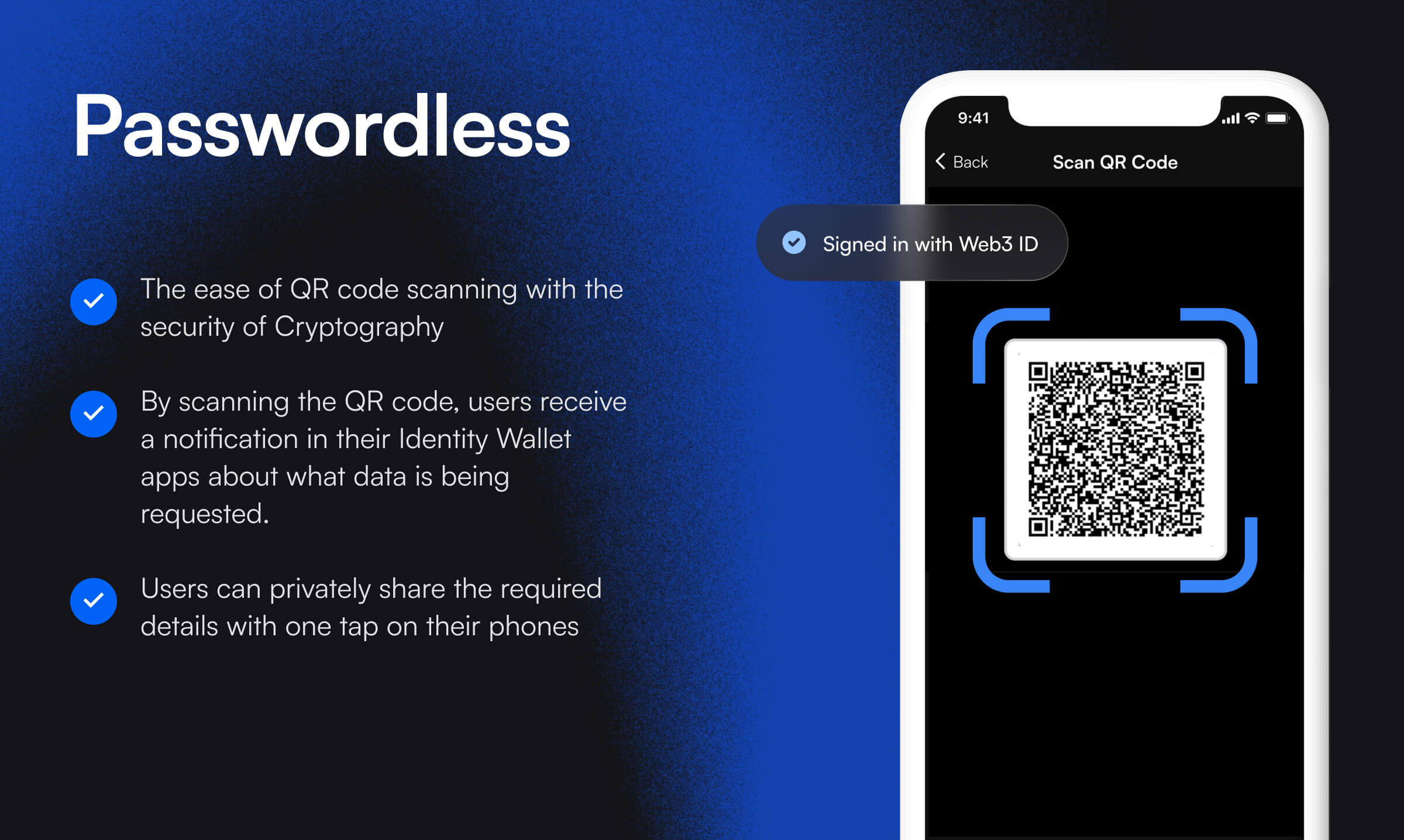
Perform a test verification with a trusted party or a demo platform. Scan a QR code or share a link to confirm that your credentials are readable and valid. This ensures your wallet is correctly configured before you begin using it for professional transactions.
Once your wallet is set up, you can begin receiving credentials. Remember that your reputation is built on the validity of these credentials and how securely you manage your private keys.
Acquire verifiable professional credentials
Building trust in Web3 starts with proof. You need verifiable credentials (VCs) issued by recognized employers, educational institutions, or professional bodies. These credentials act as digital badges that others can instantly verify without contacting the issuer.
Think of a VC like a sealed diploma. The issuer (your university) stamps it with a cryptographic signature. You hold it in your wallet. When an employer asks for proof, you share the credential. They check the signature and know it’s authentic. No phone calls, no background check delays.
1. Request credentials from your current or past institutions
Start with the sources you already trust. Contact your HR department or alumni office and ask if they issue verifiable credentials. Many universities and large employers now use platforms like Accredible or Blockcerts. If they don’t offer VCs yet, ask them to consider it. Your participation drives adoption.
Look at your employment history and education. List every employer, school, or certification body that has issued you a formal document. Prioritize those with existing digital infrastructure. These are your easiest wins for acquiring VCs.
Contact the issuer’s HR or registrar office. Ask specifically for a "verifiable credential" or "digital badge" in a W3C-compliant format (like JSON-LD). If they use a specific platform, ask for access to your digital wallet or badge holder account.
Once issued, open the credential in a compatible wallet. Check that the issuer’s name, your name, and the issue date are correct. Use the wallet’s verification tool to confirm the cryptographic signature. This step ensures the credential hasn’t been tampered with.
2. Store credentials in a compatible wallet
Your credentials are only useful if you can access them. Use a self-sovereign identity wallet that supports W3C Verifiable Credentials standards. Popular options include Polygon ID, SpruceID, or browser-based wallets like MetaMask (with extensions). Ensure your wallet can store multiple credential types.
3. Share selectively when needed
When applying for jobs or verifying identity, you don’t need to send the entire credential. Use zero-knowledge proofs if supported. This lets you prove you have a credential (e.g., "I am over 18" or "I have a CPA license") without revealing unnecessary details like your exact birthdate or license number.
-
Verify W3C VC compatibility before storing
-
Test sharing with a trusted contact first
-
Keep backups of credential JSON files offline
Link your identity to a professional domain
A decentralized identifier is only as useful as its accessibility. To bridge the gap between complex cryptographic keys and human networking, you need a human-readable domain. This acts as your digital business card, allowing clients, employers, and peers to find and verify you without needing to understand the underlying blockchain mechanics.
The most common approach is registering a domain that resolves directly to your wallet address. Services like Ethereum Name Service (ENS) or specialized Web3 domains like .pw offer this functionality. When someone types your domain into a browser or wallet app, it translates to your public key, granting them immediate access to your verified profile or portfolio.
This connection serves two critical functions for professional credibility. First, it simplifies outreach; a simple URL is far easier to share in emails or on LinkedIn than a 42-character hex string. Second, it provides a stable anchor for your reputation. As you accumulate verifiable credentials and work history on-chain, your domain remains the consistent entry point to your growing professional record.
To implement this, choose a domain provider that supports wallet resolution. During registration, you will link your primary wallet address to the domain. This step effectively claims your identity namespace. Ensure the domain is transferred to your self-custody wallet rather than leaving it in a third-party account, maintaining the decentralized nature of your professional presence.
Manage privacy and selective disclosure
Traditional identity verification requires handing over your entire passport or driver’s license. In Web3, you can prove specific facts without revealing the underlying data. This is where selective disclosure comes in. It allows you to share only the minimum information necessary for a transaction or verification, keeping the rest private.
Think of it like showing a bouncer you are over 21. You don’t need to hand over your ID to prove your age; you just need to prove that one fact. Selective disclosure works the same way using zero-knowledge proofs (ZKPs). These cryptographic methods allow a verifier to confirm a statement is true without seeing the actual data.
To implement this, you first need a Verifiable Credential (VC) that contains the data you want to protect. Instead of sharing the raw VC, you generate a ZK-proof that attests to specific claims within that credential. For example, you can prove you hold a valid professional certification without revealing your name, employer, or certification ID.
This approach is essential for maintaining privacy in high-stakes environments. It prevents identity leakage and reduces the risk of data breaches. By controlling exactly what data is shared and with whom, you maintain sovereignty over your professional reputation while satisfying regulatory or compliance requirements.
Review compliance and data governance
Your Web3 professional identity is only as strong as its legal foundation. Building a decentralized reputation on-chain is powerful, but it carries significant liability if you mishandle the underlying data. You must ensure that the infrastructure supporting your identity claims complies with strict data protection laws like the GDPR and CCPA. The goal is to prove your credentials without exposing your private personal information to public view.
Map off-chain data to on-chain proofs
The core challenge in Web3 identity is the mismatch between immutable blockchains and the "right to be forgotten" required by privacy laws. You cannot delete data from a public ledger. To solve this, use decentralized identifiers (DIDs) that keep sensitive personal data off-chain while storing only cryptographic proofs on-chain.
Store your actual credentials in a secure, encrypted vault or a compliant decentralized storage network like IPFS with encryption. The blockchain should only hold the hash of the credential or a zero-knowledge proof that verifies the claim without revealing the source data. This separation ensures that if a user revokes consent, the off-chain data can be destroyed or access revoked, satisfying legal deletion requirements while the on-chain proof remains valid but useless without the key.
Verify regulatory alignment early
Before launching your identity protocol, audit your data flow against relevant regulations. The European Union’s General Data Protection Regulation (GDPR) is the strictest benchmark. It classifies certain types of identity data as "special category" data, requiring explicit consent and high security standards. If your identity system processes data of EU citizens, you must designate a Data Protection Officer and ensure your smart contracts do not inadvertently leak metadata that could re-identify users.
Don’t rely on generic legal advice. Engage specialists who understand both blockchain architecture and data privacy law. They can help you structure your terms of service and privacy policy to reflect the unique nature of self-sovereign identity. This proactive step prevents costly fines and builds trust with enterprise partners who require rigorous compliance checks.
Implement consent management
Compliance is not a one-time setup; it is an ongoing process. Implement a robust consent management platform that allows users to view, edit, and revoke access to their identity data at any time. This feature is not just a legal requirement; it is a competitive advantage. Professionals are more likely to adopt a platform that gives them true control over their digital footprint.
Use the Checklist component to ensure you have covered the critical compliance bases before going live.
Recommended tools for identity infrastructure
Building a professional Web3 identity requires a stack of reliable tools. You need a wallet to hold credentials, an issuer to verify them, and a domain to anchor your reputation. Choosing the right infrastructure ensures your digital identity remains secure and portable.
Wallets
Your wallet is the foundation. It stores your private keys and displays your verifiable credentials. For professional use, prioritize hardware wallets like Ledger or Trezor. They keep your keys offline, protecting your identity from online threats. Software wallets like MetaMask are convenient for daily transactions but offer less security for long-term reputation storage.
Credential Issuers
To prove your qualifications, you need a trusted issuer. Platforms like Dock or Sovrin Network allow organizations to issue verifiable credentials directly to your wallet. These credentials are cryptographically signed, meaning anyone can verify them without contacting the issuer. This creates a tamper-proof record of your professional achievements.
Domain Registrars
A decentralized domain like an ENS (Ethereum Name Service) or .pw domain gives your identity a human-readable address. It links your wallet, social profiles, and credentials into one profile. This makes it easier for colleagues and clients to find and verify you. According to Endless Domains, using .pw domains can help professionals build and maintain a distinct online presence.



As an Amazon Associate, we may earn from qualifying purchases.
No comments yet. Be the first to share your thoughts!